
210 Maoist cadres, including a Central Committee member, surrendered to authorities in Chhattisgarh's Jagdalpur, marking the "largest mass surrender" in the state's anti-Naxal operations. The surrendered Naxalites carried a collective bounty of Rs 9.18 crore and handed over 153 weapons. Chief Minister Vishnu Deo Sai hailed the development as a historic moment for Chhattisgarh and the nation.

Three senior leaders of the banned CPI (Maoist) surrendered to the Telangana police. The leaders cited health issues, ideological differences, and changing socio-political circumstances as reasons for their surrender. The Telangana DGP appealed to other underground Maoist cadres to return to the mainstream.
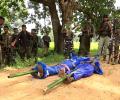
'Many of them are mutilated beyond recognition. Every day an encounter takes place.' 'Bastar has been burnt to ash.'
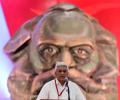
The 24th CPI(M) Party Congress commenced in Madurai, Tamil Nadu, with interim coordinator Prakash Karat emphasizing the need for Left unity to combat "Hindutva neo-fascism." He criticized the BJP-RSS government, accusing it of representing a "Hindutva-corporate nexus" and displaying "neo-fascist characteristics." Other Left leaders, including CPI general secretary D Raja and CPI(ML) Liberation general secretary Dipankar Bhattacharya, echoed calls for unity and condemned the current political climate in India.
Fearing imminent arrest and likely reprisals from the CRPF -- 25 of whose jawans were gunned down by the Maoists inside a jungle just 200 to 300 metres away from their homes on the afternoon of April 24 -- young Adivasi men and women in Burkapal abandoned their homes and fled into the jungle.
'In the districts of Jagdalpur and Dantewada, the only time the accused walked out of jail was when they were acquitted. There is no concept of bail.' 'The women were very clear -- they had to fight. Remaining silent any longer was not an option.'

The response was tepid in other parts of the country even as several INDIA bloc parties as well as other non-BJP outfits extended their support to the bandh.
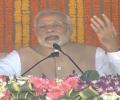
The Congress hit back at Modi and accused him of indulging in his 'trademark petty politics' and seeking to hide his 'abject failure and weak-kneed' approach to fighting Naxalism.

Under threat from the Maoists, and jailed by the police, AAP's Soni Sori plunges into the election for all she holds dear. Aman Sethi reports

Congress leader Rahul Gandhi on Saturday promised free education in government schools and colleges in Chhattisgarh and Rs 4,000 a year for 'tendu' leaves collectors if his party retains power in the state.

Tribal rights activist Soni Sori, who was attacked with an acid-like chemical in Chhattisgarh last month, has said that the condition of her face is reflective of the fight in Naxal-hit Bastar area.

Vishnu Deo Sai, a prominent tribal face of the Bharatiya Janata Party in Chhattisgarh, will be state chief minister after he was elected as leader of Bharatiya Janata Party's legislative party during a meeting of 54 newly-elected MLAs in Raipur on Sunday.
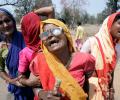
'In Bastar, as in Delhi, being branded 'anti-national' in the eyes of the government now seems to have acquired new meaning,' says Aakar Patel.

Professor Nandini Sundar who won the Infosys Prize 2010 in social anthropology speaks about the apathy of Indian bureaucracy.
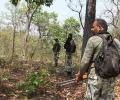
CRPF troopers confront loneliness, poor network connectivity, poor work conditions, dismal work-life balance, and immense psychological stress.

The ruling Congress is seeking to retain power in Chhattisgarh by banking on the welfare schemes of the Bhupesh Baghel government, while the Bharatiya Janata Party is hoping to corner it on the issues of alleged corruption, religious conversions and unfulfilled poll promises.

Rediff.com's Uttam Ghosh picks images of India from his travels.

She also alleged that police has been forcing some people to name them in someway since May.

The development is being seen as a blow to the opposition Congress which was planning to forge a grand alliance in Chhattisgrah to unseat the ruling BJP.

From Jhargram to Kanyakumari, Rediff.com's Uttam Ghosh shows us what summer feels like in most parts of the country.
Development and smart policing must go hand in hand in Chhattisgarh, says Sanjeev Nayyar who travelled through several Naxal affected regions of the state.
'This was long expected because Mahendra Karma was on the Maoists's hit list... I don't think the Maoists cared as much about the consequences as they cared about the fact that they had to get rid of Mahendra Karma. Whatever else they do or don't do now, they can say they have revenged Salwa Judum.' Sociologist Nandini Sundar on the Maoist massacre and its aftermath.
'As long as you are talking about Adivasis in Bastar or the brutalisation of the State nobody raises an eyebrow. But the moment you talk about Kashmiri Pandits -- after all, we were a religious minority in Kashmir -- and how they being in a minority were targeted it doesn't go down well and no one speaks about it.' 'That is the saddest and most ironical aspect of this whole tragedy,' Rahul Pandita, a Kashmiri Pandit and author of Our Moon Has Blood Clots, a book that chronicles the plight of his community in the strife-torn Kashmir Valley, tells Prasanna D Zore/Rediff.com

While the Chhattisgarh police charged the well-known academic with a tribal man's murder, those who know her say it is vendetta at play.

Rahul Gandhi also attacks Modi and RSS in Bastar.

Rampur Sadar and Khatauli in Uttar Pradesh, Padampur in Odisha, Sardarshahar in Rajasthan, Kurhani in Bihar and Bhanupratappur in Chhattisgarh are the assembly seats where the bypolls are being held.

'India is my country and we will raise our voice against anybody who harms the interests of Adivasis, be it the state government or the Maoists.'
Before the situation in the Naxal-affected areas got out of hand, the Raman Singh government intervened to calm tempers between the police and human rights activists.

'The whole idea is to intimidate lawyers like me and others who are helping the Adivasi women seek justice and file FIRs against the security personnel for raping them.'
'Adivasis are a critical national treasure, so we need to protect them.' 'The fight for the tribals of Chhattisgarh needs people from all political parties. It cannot be about any single political group.'

Manhas went missing after the April 3 gunfight between Naxals and security personnel near Sukma-Bijapur border.

The operation was conducted between June 23 and 25, the police said.

'By hoisting the national flag we have kindled a small flame of hope among the Adivasis.' 'We will strive to keep this flame burning forever among their hearts.'

Despite being in the crosshairs of the police, politicians and vigilantes, Malini Subramaniam continues to report from a hotbed of Maoist insurgency.
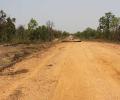
Roads are of great importance to win the war against the rebels in Sukma
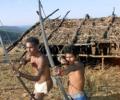
It is the low cost of iron ore extracted from their adivasi homeland mines that enables steelmakers like Tata Steel and Essar, and miners like NMDC, not only to be among the most profitable companies in India, but also gives it the financial muscle to make huge overseas acquisitions. Ultimately, it is the poor adivasi who pays for it with his home and hearth and gets no credit for it! Either from the State, which connives in their exploitation, or the industry that lords over their resources, says Mohan Guruswamy.

'Under the guise of Maoism, the State is presently determined to clear out the whole Bastar area of its tribal population.'

Rahul Gandhi attacked the Bharatiya Janata Party government in Chhattisgarh for its failure to act against Maoists responsible for killing many Congress leaders in May.
I can't see what purpose can be served by an apology by a British government that cannot in any way be blamed for one sadistic man running amok 100 years ago, argues Sunanda K Datta-Ray.
In Nagpur Central Jail's 'Anda Cell' languishes a 90% disabled, ailing, professor, sentenced to life imprisonment for Maoist links.
 © 2026 Rediff.com - Advertise with us - Disclaimer - Privacy Policy - Sitemap - Feedback - About us - Terms of use - Grievances